
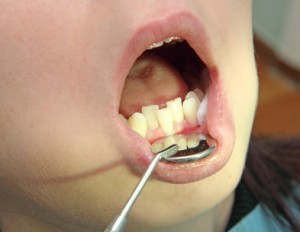
 The other day I was asked a couple of interesting questions. The question was: How crooked is too crooked to straighten? Are my teeth too crooked for Invisalign? And, it made me realize that one thing that is seldom addressed is what makes treatment for braces an easy as opposed to a difficult case to treat. And, what exactly is too difficult to treat or not treatable at all.
 instill good oral health habits in your child. So read on for our recommendations on how to help your little one learn how good oral health starts at home!
- Remember the best way for them to learn is to lead by example.
- Despite what your child says they need help brushing. You should be helping brush and checking your child’s brushing until they are at least 9 years old. Most kids do not have the manual dexterity to be efficient brushers until they are older. An electric tooth brush can help with a lot of the plaque removal but you should still be checking their teeth and doing a quick brush up of their back teeth as well.
- Get your child a toothbrush timer! Or an electric toothbrush with a timer built in. Even as an adult its hard to judge 2-3 minutes without some sort of timer.
- Once your child starts to get their adult teeth in you should introduce child flossers. I believe that flossing with children should be done by the child. Flossers get the child used to adding flossing to their daily routine and as they grow and develop better manual dexterity they can replace the flossers with regular floss.
- There are a myriad of dental products that are geared to every age group, in a variety of flavors and textures. Find which is your child’s favorite so the taste is not a deterrent.
- And lastly, DO NOT use going to the dentist as a threat, i.e.: ‘if you don’t brush your teeth then you are going to have to go to the dentist’. You want to avoid attaching negative feelings towards going to the dentist or their home care regimen. Also, its hard as a dentist to start a child’s first dental visit with them already hating being there without ever having been. Instead focus on the positives, for example: ‘If you want to have happy, healthy teeth you have to brush them’
 Being a dentist a question we get quite frequently is: Is this going to hurt? So that brings me to today’s topic: What to expect from your dental visit.
One thing to mention is that in dentistry each individuals experience is different. Just as every person is different we find that every procedure is different. And, quite simply the only time you can consider a dental procedure as having been routine when you have looked at it retrospectively and decided that it had gone routinely. That being said, following is a list of the average experiences of patients for the most common procedures performed in the dental office.
Being a dentist a question we get quite frequently is: Is this going to hurt? So that brings me to today’s topic: What to expect from your dental visit.
One thing to mention is that in dentistry each individuals experience is different. Just as every person is different we find that every procedure is different. And, quite simply the only time you can consider a dental procedure as having been routine when you have looked at it retrospectively and decided that it had gone routinely. That being said, following is a list of the average experiences of patients for the most common procedures performed in the dental office.
- Regular Hygiene/ Cleanings : Regular 6 month recall appointments should be pain free during the procedure as well as after. However, you may experience sensitivity during treatment or soreness afterwards if you: normally experience hot or cold sensitivity, have not had a cleaning in a while or have deep or inflamed periodontal pocketing. For many patients who experience the aforementioned things, as practitioners, we may recommend they be numb for their cleaning appointments to avoid discomfort during the cleaning.
- Fillings and Crown/Bridge: During these appointments you should feel little to no pain once sufficiently numb. Local anesthesia will block any hot, cold or pain sensations, however it will not block the feeling of pressure in the area. After your appointment some may experience hot or cold sensitivity, this does not always happen however it is a risk and typically can last for up to a week or two.
- Root Canal Treatment: Your reaction to this procedure is dependent on the status of the nerve prior to treatment. Teeth that are infected or already in the midst of a toothache may have more difficulty achieving profound anesthesia. However, most patients do not have this experience. Once the area is sufficiently numb, similar to a filling, you should just feel pressure. Afterwards the tooth will normally experience a sore almost bruised feeling for about 5-7 days.
- Extractions and Implant Placement: This procedure, once numb, you will feel pressure and an intense squeezing sensation. The pressure usually is felt throughout the whole quadrant of the mouth that is being worked on. However, you should not feel any sharpness or pain. Afterwards, you should feel sore in the area for about 5-10 days.
fix a cavity or a broken tooth? If you have you probably were thinking to yourself, what the heck is that? Inlays and onlays are usually prescribed when you have a large cavity or are missing a large portion of your tooth and need a more resilient material. In these situations resin or amalgam fillings wouldn’t do the trick because they would not be able to hold up over time against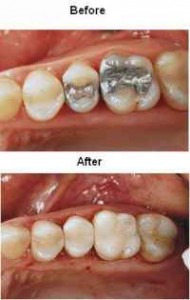 the force of your bite. Inlays and onlays solve the problem of needing more strength in a restoration without having to take the next step towards a crown.
Inlays and onlays can be performed in one visit with the use of Cerec technology. Cerec allows you to fabricate a custom restoration out of porcelain outside of the mouth. This restoration is then cemented into place. It used to be that in order to do an inlay or onlay you need to prepare the tooth, take an impression, send that to a lab, wait 2-3 weeks with a temporary in your tooth, and THEN come back and cement the permanent restoration into place. With Cerec technology you can leave the office with a custom made restoration permanently cemented into place in one visit. It eliminates the need to deal with impression material, the wait until you get your final restoration, or the worry that you will lose your temporary filling why you are waiting all that time.]]>
the force of your bite. Inlays and onlays solve the problem of needing more strength in a restoration without having to take the next step towards a crown.
Inlays and onlays can be performed in one visit with the use of Cerec technology. Cerec allows you to fabricate a custom restoration out of porcelain outside of the mouth. This restoration is then cemented into place. It used to be that in order to do an inlay or onlay you need to prepare the tooth, take an impression, send that to a lab, wait 2-3 weeks with a temporary in your tooth, and THEN come back and cement the permanent restoration into place. With Cerec technology you can leave the office with a custom made restoration permanently cemented into place in one visit. It eliminates the need to deal with impression material, the wait until you get your final restoration, or the worry that you will lose your temporary filling why you are waiting all that time.]]>
 completed but some of the great smiles we noticed along the way!
Top 5
#5 Serena Williams, a dominating performance in the women tennis final, and a beautiful smile to go along with it.
#4 Allyson Felix, the long-time star finally reeled the gold in the 200 m. It was nice to see someone with such nice pearly whites beaming from ear to ear.
#3 Dana Vollmer, Wow! Three gold medals and one of the top smiles in the Olympic games.
#2 Gabby Douglas winner of two gold medals, who’s smile is literally contagious.
Our top pick for biggest and brightest smile is winner of Five Olympic medals, four gold and one bronze, Missy Franklin (who recently had her braces removed)
A couple of side notes:
Honorable mentions going to our Olympian braces wearer Lashinda Demus and a nod to Ryan Lochte for his patriotic grill.
Finally, Congrats to Michael Phelps for achieving what no other Olympian has ever done. However, we would love to see him straighten out that well known smile with invisalign or braces one day.
Go USA!]]>
completed but some of the great smiles we noticed along the way!
Top 5
#5 Serena Williams, a dominating performance in the women tennis final, and a beautiful smile to go along with it.
#4 Allyson Felix, the long-time star finally reeled the gold in the 200 m. It was nice to see someone with such nice pearly whites beaming from ear to ear.
#3 Dana Vollmer, Wow! Three gold medals and one of the top smiles in the Olympic games.
#2 Gabby Douglas winner of two gold medals, who’s smile is literally contagious.
Our top pick for biggest and brightest smile is winner of Five Olympic medals, four gold and one bronze, Missy Franklin (who recently had her braces removed)
A couple of side notes:
Honorable mentions going to our Olympian braces wearer Lashinda Demus and a nod to Ryan Lochte for his patriotic grill.
Finally, Congrats to Michael Phelps for achieving what no other Olympian has ever done. However, we would love to see him straighten out that well known smile with invisalign or braces one day.
Go USA!]]>
 With the increase in painkiller abuse in America there is a lot of speculation as to who is responsible for this epidemic? Is it the patient with the addiction or is it the ease of legal access to these drugs? This has always been a tough subject for health care professionals, especially those in the dental field.
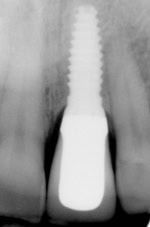 What is the cost of a dental implant? Why is there such a variation in fees for dental implants? Are the advertisements I see for $499 dental implants too good to be true? When trying to figure out what the appropriate fee for a dental implant should be one should know exactly what the procedure entails. Here are the dental implant facts:
- There are about three parts that make up an implant restored tooth. The implant, which is surgically placed into the jaw and acts as the root. The post, which screws into the implant to connect the implant to the crown. Then finally the crown, which is cemented or screwed onto the post.
- To have an implant placed and completed start to finish can take between 3-6 months. However with each person the timeline may vary. Time can be added to this treatment if the area needs to have bone grafting. Bone grafting helps regenerate missing bone in areas where there is not enough space for an implant. This can add about 3-6 months to your overall procedure timeline as the grafting is normally done before the implant surgery.
If you’ve been following the news recently you may have seen articles about legislation trying to pass laws allowing increased use of Dental  Therapists in under-served populations. There has been a lot of controversy about this subject because of exactly what a dental therapist is and their role in dental care in the United States. Currently dental therapists are allowed to practice in Alaska and Minnesota. However, there has been discussion about other states such as Connecticut, Oregon, New Hampshire and California allowing dental therapists to practice. Dental therapists are defined by the University of Minnesota School of Dentistry as ” a licensed oral health professional who practices as part of the dental team to provide educational, clinical and therapeutic patient services. Dental therapists provide basic preventive and restorative treatment to children and adults, and extractions of primary (baby) teeth under the supervision of a dentist. Dental therapists work primarily in settings that serve low-income and under served patients, or in a dental health shortage area.”
Individuals participating in dental therapy programs have training that is significantly shorter than general dentists. A dental therapist must complete at least one year of undergraduate college course work before they can participate in a 2 1/2 year program to teach them the basic skills of local anesthesia, preventative dentistry (such as cleanings and dental sealants), uncomplicated extractions, radiology as well as diagnosis and treatment of cavities. As opposed to general dentists who, in most circumstances, must complete four years of undergraduate college, four years of dental school and in New York state a year of residency.
So what exactly is all the commotion about allowing dental therapists to practice in under served areas? There has been a question about how to address the growing need for care, especially with children, however due to therapists limited training the American Dental Association has brought up concerns that they are not equipped to provide the level of care necessary to complete many of the procedures they are being licensed to perform. And, since many are not reversible such as extractions and fillings, there should be better training of these professionals. Other organizations have made the argument that patients that have medicaid or are in areas with a poor dentist to patient ratio are unable to receive appropriate dental care due to cost of dentistry and many general dentists not accepting these patients into their practices. So the conundrum is how do we provide appropriate care for this needful population in a safe and ethical way. Are dental therapists the solution to this problem or the creation of an even bigger problem?]]>
Therapists in under-served populations. There has been a lot of controversy about this subject because of exactly what a dental therapist is and their role in dental care in the United States. Currently dental therapists are allowed to practice in Alaska and Minnesota. However, there has been discussion about other states such as Connecticut, Oregon, New Hampshire and California allowing dental therapists to practice. Dental therapists are defined by the University of Minnesota School of Dentistry as ” a licensed oral health professional who practices as part of the dental team to provide educational, clinical and therapeutic patient services. Dental therapists provide basic preventive and restorative treatment to children and adults, and extractions of primary (baby) teeth under the supervision of a dentist. Dental therapists work primarily in settings that serve low-income and under served patients, or in a dental health shortage area.”
Individuals participating in dental therapy programs have training that is significantly shorter than general dentists. A dental therapist must complete at least one year of undergraduate college course work before they can participate in a 2 1/2 year program to teach them the basic skills of local anesthesia, preventative dentistry (such as cleanings and dental sealants), uncomplicated extractions, radiology as well as diagnosis and treatment of cavities. As opposed to general dentists who, in most circumstances, must complete four years of undergraduate college, four years of dental school and in New York state a year of residency.
So what exactly is all the commotion about allowing dental therapists to practice in under served areas? There has been a question about how to address the growing need for care, especially with children, however due to therapists limited training the American Dental Association has brought up concerns that they are not equipped to provide the level of care necessary to complete many of the procedures they are being licensed to perform. And, since many are not reversible such as extractions and fillings, there should be better training of these professionals. Other organizations have made the argument that patients that have medicaid or are in areas with a poor dentist to patient ratio are unable to receive appropriate dental care due to cost of dentistry and many general dentists not accepting these patients into their practices. So the conundrum is how do we provide appropriate care for this needful population in a safe and ethical way. Are dental therapists the solution to this problem or the creation of an even bigger problem?]]>
 The basics: Generally there are two types of floss: Rope and Tape. They are either waxed or un-waxed. Tape: a flat string usually made of a smooth material: this is the type of floss that we recommend the most due to the ease of use between tight teeth and teeth with a lot of restorative work such as fillings and crowns. Rope: this is usually a braided or round string or rope that can be covered in wax or not, depending on your preference. I tend to avoid this type of floss due to the difficulty of use. Often times if you have tightly contacting teeth this type tends to fray or break more often than a tape will. Specialty floss and floss threaders: There are a series of flosses and floss threaders that are made specifically to be used around bridge work and braces. Super Floss is a brand that I recommend often for patients because it is a thick and spongy floss with a flexible plastic end that is relatively easy to use underneath bridgework and around orthodontic brackets. Dental Flossers: these are small plastic handles with floss attached at the end, most often a rope type of floss. My opinion on floss threaders is, if you find that you can not or will not use any other type of floss then they can be used. But I rarely recommend them since you lack the ability to maneuver them around the teeth appropriately and can do a little damage to the gums if the patient is not careful when using them. Water pics and Air flossers: these are electric tools similar to an electric tooth brush that either use air or water to force debris out from in between teeth and out from under restorative work. My opinion on these tools is that while I believe that they have improved water pics and air flossers immensely in the past few years, they are an adjunct to the use of regular floss. The use of regular dental floss is still the gold standard.]]>
