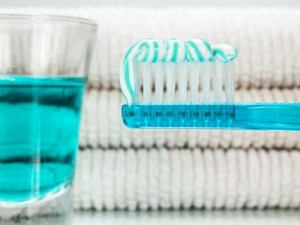

Fotolia_37296172_XS-200x300instill good oral health habits in your child. So read on for our recommendations on how to help your little one learn how good oral health starts at home!

  • Remember the best way for them to learn is to lead by example.
  • Despite what your child says they need help brushing. You should be helping brush and checking your child’s brushing until they are at least 9 years old. Most kids do not have the manual dexterity to be efficient brushers until they are older. An electric tooth brush can help with a lot of the plaque removal but you should still be checking their teeth and doing a quick brush up of their back teeth as well.
  • Get your child a toothbrush timer! Or an electric toothbrush with a timer built in. Even as an adult its hard to judge 2-3 minutes without some sort of timer.
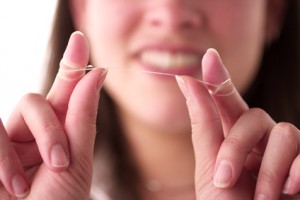
  • Once your child starts to get their adult teeth in you should introduce child flossers. I believe that flossing with children should be done by the child. Flossers get the child used to adding flossing to their daily routine and as they grow and develop better manual dexterity they can replace the flossers with regular floss.
  • There are a myriad of dental products that are geared to every age group, in a variety of flavors and textures. Find which is your child’s favorite so the taste is not a deterrent.
  •  And lastly, DO NOT use going to the dentist as a threat, i.e.: ‘if you don’t brush your teeth then you are going to have to go to the dentist’. You want to avoid attaching negative feelings towards going to the dentist or their home care regimen.  Also, its hard as a dentist to start a child’s first dental visit with them already hating being there without ever having been. Instead focus on the positives, for example: ‘If you want to have happy, healthy teeth you have to brush them’
Focusing on prevention of cavities is incredibly important for children. By teaching our kids to be good brushers and flossers we can give them the gift of healthy teeth and gums that will last them a lifetime!]]>

Fotolia_13918662_XS-200x300Being a dentist a question we get quite frequently is: Is this going to hurt? So that brings me to today’s topic: What to expect from your dental visit. One thing to mention is that in dentistry each individuals experience is different. Just as every person is different we find that every procedure is different. And, quite simply the only time you can consider a dental procedure as having been routine when you have looked at it retrospectively and decided that it had gone routinely.  That being said, following is a list of the average experiences of patients for the most common procedures performed in the dental office.

  • Regular Hygiene/ Cleanings : Regular 6 month recall appointments should be pain free during the procedure as well as after. However, you may experience sensitivity during treatment or soreness afterwards if you:  normally experience hot or cold sensitivity, have not had a cleaning in a while or have deep or inflamed periodontal pocketing. For many patients who experience the aforementioned things, as practitioners, we may recommend they be numb for their cleaning appointments to avoid discomfort during the cleaning.
  • Fillings and Crown/Bridge: During these appointments you should feel little to no pain once sufficiently numb. Local anesthesia will block any hot, cold or pain sensations, however it will not block the feeling of pressure in the area. After your appointment some may experience hot or cold sensitivity, this does not always happen however it is a risk and typically can last for up to a week or two.
  • Root Canal Treatment:  Your reaction to this procedure is dependent on the status of the nerve prior to treatment. Teeth that are infected or already in the midst of a toothache may have more difficulty achieving profound anesthesia. However, most patients do not have this experience. Once the area is sufficiently numb, similar to a filling, you should just feel pressure. Afterwards the tooth will normally experience a sore almost bruised feeling for about 5-7 days.
  • Extractions and Implant Placement: This procedure, once numb, you will feel pressure and an intense squeezing sensation. The pressure usually is felt throughout the whole quadrant of the mouth that is being worked on. However, you should not feel any sharpness or pain. Afterwards, you should feel sore in the area for about 5-10 days.
So, long story short, you should not feel pain during your dental appointments. With the array of great local anesthetics available you should be able to complete a multitude of procedures pain free. With some procedures sensitivity and soreness is to be expected. However, soreness is normally likened to a dull bruised feeling. And, remember you should always feel comfortable asking your dentist what their expectations are for your visit, during and after.]]>

Entries with this post type link to a different page with their headline. Lorem ipsum dolor sit amet, consectetuer adipiscing elit. Aenean commodo ligula eget dolor.

fix a cavity or a broken tooth? If you have you probably were thinking to yourself, what the heck is that? Inlays and onlays are usually prescribed when you have a large cavity or are missing a large portion of your tooth and need a more resilient material. In these situations resin or amalgam fillings wouldn’t do the trick because they would not be able to hold up over time againstbefore_and_after-190x300 the force of your bite. Inlays and onlays solve the problem of needing more strength in a restoration without having to take the next step towards a crown. Inlays and onlays can be performed in one visit with the use of Cerec technology. Cerec allows you to fabricate a custom restoration out of porcelain outside of the mouth. This restoration is then cemented into place. It used to be that in order to do an inlay or onlay you need to prepare the tooth, take an impression, send that to a lab, wait 2-3 weeks with a temporary in your tooth, and THEN come back and cement the permanent restoration into place. With Cerec technology you can leave the office with a custom made restoration permanently cemented into place in one visit. It eliminates the need to deal with impression material, the wait until you get your final restoration, or the worry that you will lose your temporary filling why you are waiting all that time.]]>

gabby-douglas-240x340-211x300completed but some of the great smiles we noticed along the way! Top 5 #5   Serena Williams, a dominating performance in the women tennis final, and a beautiful smile to go along with it. #4   Allyson Felix, the long-time star finally reeled the gold in the 200 m.  It was nice to see someone with such nice pearly whites beaming from ear to ear. #3  Dana Vollmer, Wow! Three gold medals and one of the top smiles in the Olympic games. #2  Gabby Douglas winner of two gold medals, who’s smile is literally contagious. Our top pick for biggest and brightest smile is winner of Five Olympic medals, four gold and one bronze,  Missy Franklin  (who recently had her braces removed) A couple of side notes: Honorable mentions going to our Olympian braces wearer Lashinda Demus and a nod to  Ryan Lochte for his patriotic grill. Finally, Congrats to Michael Phelps for achieving what no other Olympian has ever done.  However, we would love to see him straighten out that well known smile with invisalign or braces one day. Go USA!]]>

Fotolia_41027514_XS-300x199With the increase in painkiller abuse in America there is a lot of speculation as to who is responsible for this epidemic? Is it the patient with the addiction or is it the ease of legal access to these drugs? This has always been a tough subject for health care professionals, especially those in the dental field.

Prescribing narcotics in the dental field is not something to be taken lightly, statistics show that about 12% of opioids in the U.S. are prescribed by dental practitioners. And, with the rise in prescription drug abuse the medical and dental community have been urged by Washington to be more cautious with opioid prescription. However, some procedures and situations, such as surgical procedures and pain resulting from severely infected teeth can leave a patient in a lot of pain. Being restrictived use only the use of over the counter pain medications rather than prescription medications can leave the patient in pain and counting down the minutes until when they are able to take their next dose. Health practitioners must use their discretion when deciding to prescribe or recommend over the counter medications. Because of the increase of abuse, practitioners must be more diligent about writing prescriptions to ensure that they are not enabling addicts. The Drug Enforcement Agency has come to the aid in this situation by providing a log of patients that are filling prescriptions in a short period of time at various pharmacies and/or written by different practitioners. This gives wary healthcare providers a resource to aid in their decision whether or not to not prescribe to a potentially drug seeking patient.]]>