Posts

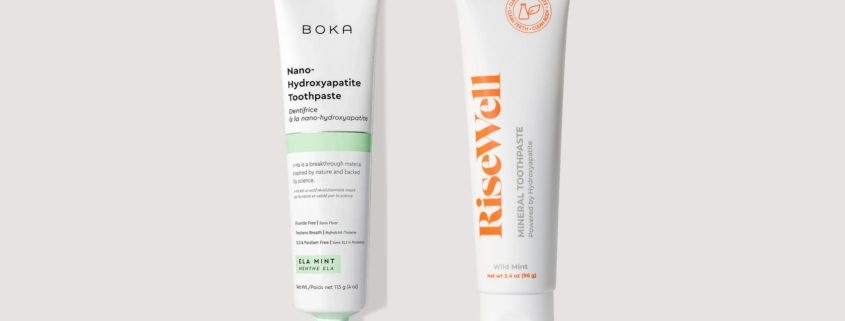
Boka Ela Mint and RiseWell Mineral nano-hydroxyapatite toothpaste tubes side by side on a neutral background

Tuesday, June 23, 2026 — Frangella Dental

You’ve probably seen the tubes at Whole Foods or in your Instagram feed. Boka. RiseWell. Apagard. Davids. The label says “fluoride-free,” the marketing leans clean and minimal, and the active ingredient — nano-hydroxyapatite, or n-HAp — gets credit for everything from remineralizing enamel to preventing cavities to “naturally rebuilding” your teeth.

We’ve been getting a lot of questions about it. So here is what we can actually defend as practicing dentists, separated from what’s marketing.

What It Is

Hydroxyapatite is the mineral your tooth enamel is already made of. Nano-hydroxyapatite is the same mineral milled into particles 20 to 100 nanometers across. It was first developed by NASA in the 1970s for bone and tooth demineralization in astronauts. Japan has had it as an over-the-counter ingredient since 1980 — Apagard has been on Tokyo drugstore shelves for forty years.

That history is real. The mechanism debate is what’s complicated.

What the Evidence Actually Supports

We want to be careful here, because the marketing for these toothpastes is well ahead of the clinical evidence.

Sensitivity reduction is proven. Multiple randomized trials show n-HAp toothpaste reduces dentinal hypersensitivity, often comparably to traditional desensitizing pastes. The mechanism is straightforward — the nanoparticles physically occlude open dentinal tubules at the gumline and on exposed root surfaces. That’s the one claim we’re comfortable making without hedging.

Beyond sensitivity, the evidence weakens.

“Remineralization” the way fluoride does it — actually rebuilding the subsurface enamel structure — has good in vitro support but limited clinical proof. The lab studies look promising. The real-world cavity-prevention data is thinner and the mechanism is debated.

“Enamel protection” — the deposited n-HAp layer is real but transient. It can be brushed off, abraded, or dissolved by the next acid exposure. Head-to-head against fluoride, fluoride performs equal or better at acid resistance in most studies.

“Cavity prevention” — a handful of randomized trials have shown non-inferiority to fluoride in specific populations (notably the Schlagenhauf orthodontic study and a pediatric study by Paszynska). But critics, including ADA reviewers, have noted that the prevention seen could be explained by tubule occlusion and surface effects without true remineralization. We don’t yet have the decades-long, large-population data fluoride has.

The honest summary: n-HAp toothpastes are promising. They are not yet proven for anything beyond sensitivity.

How We Actually Use It in Practice

Given the above, here is the framework we use chairside.

If you have sensitive teeth — at the gumline, after whitening, with cold drinks — n-HAp is a real option. Often as effective as Sensodyne, sometimes more tolerable. This is the use case where the evidence holds up.

If you simply prefer a fluoride-free routine — for personal reasons, dietary philosophy, whatever — n-HAp is the most defensible fluoride-free choice on the market. We won’t tell you it’s equivalent to fluoride for cavity prevention, because the evidence doesn’t yet support that. But it’s better than the alternatives, and if it gets you to brush twice a day with something active in the tube, that matters.

If you have a history of cavities, active decay, dry mouth, orthodontic appliances, or any elevated caries risk — we recommend fluoride. The clinical evidence for fluoride’s cavity-prevention effect is six decades deep and overwhelming. n-HAp can supplement, but it shouldn’t replace.

For kids — we follow the standard guidance: small smear of fluoride paste from first tooth, pea-sized at age three, supervised brushing. If a child won’t tolerate fluoride or there’s a strong family preference, n-HAp is a reasonable bridge until they can manage fluoride properly.

Brands We See Most Often

We don’t sell paste at the practice and we’re not affiliated with any of these brands. The two we see most often in our patients’ bathrooms are Boka — widely available at Target, Whole Foods, and Amazon, with pleasant flavors and a kids’ line — and RiseWell, founded by a hygienist, well-balanced mint, and strong on the family side.

Two others worth knowing about: Apagard is the Japanese original (Premio is the standard; M-Plus is their advanced formula, forty-year track record). Davids is US-made in an aluminum tube with a newer n-HAp formula.

What to Tell Us

If you’ve switched or you’re considering switching, tell us. We adjust our exam — what we screen for, how often we recommend fluoride varnish at your cleaning, how aggressively we treat early lesions — based on what you’re actually doing at home. No judgment in either direction.

The best toothpaste is the one you actually use, twice a day, every day, for thirty years. The evidence base matters too.

Schedule a visit or call (212) 245-2888. We’re at 200 W. 57th Street, Suite 1405.


Frangella Dental is a family-run cosmetic and general dentistry practice in Midtown Manhattan, focused on practical, evidence-based care.

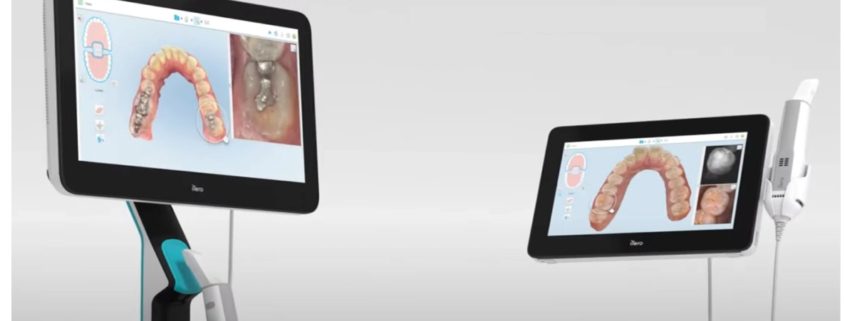
iTero Element Plus Series intraoral scanners — cart and mobile configurations used at Frangella Dental for Invisalign, crowns, and lab work

Tuesday, June 16, 2026 — Frangella Dental

If you’ve been to a dentist in the last twenty years and needed a crown, a retainer, or an Invisalign workup, you probably remember the goop. Trays of cold blue or pink impression material pushed into your mouth for two minutes while you tried not to gag, breathing through your nose, counting the seconds. It worked — but it was unpleasant, slightly inaccurate, and slow.

We retired that process years ago. We use an iTero intraoral scanner for every Invisalign workup, every crown, and most of our lab work. Here’s what that means for you.

What iTero Actually Is

iTero is a wand-style 3D scanner about the size of a small flashlight, connected to a cart with a monitor at chairside. It’s made by Align Technology — the same company behind Invisalign. The wand uses a tiny camera and a structured-light system to capture thousands of frames per second of your teeth and gums and stitches them into a precise 3D model in real time. You can watch the model build itself on the screen as we scan.

The whole thing takes between two and four minutes for a full-mouth scan. There’s no goop, no trays, no gag reflex management, no waiting for material to set.

Why It Matters for Invisalign

Invisalign cases used to live and die on the quality of the initial impression. A slightly distorted tray meant the aligners didn’t fit quite right, treatment took longer, and we had to do mid-course corrections.

With iTero, we capture your exact starting position digitally and send it directly to Align. Within about an hour we get back a 3D treatment plan showing every aligner tray, every tooth movement, and the projected final result — which we can show you on the screen at your consult. You see your projected smile before you commit. We can also model “what if we treated only the front six teeth” vs. “full arch” so you can see the trade-off in real time.

Same scanner, same data, used at every aligner check-in. We compare your actual movement to the plan visit by visit. If something’s tracking slightly off, we know within a visit — not weeks later.

Crowns and Restorations

For crowns, bridges, and inlays, the scan replaces the impression entirely. We send the digital file to our dental lab — same day, sometimes same hour. The lab mills or 3D-prints the restoration from the scan, which means:

A much tighter fit at the margins. The 3D model is more accurate than a physical impression because there’s no material distortion.

Faster turnaround. Most crowns come back in 7 to 10 days instead of two to three weeks.

Fewer remakes. The lab sees exactly what we see, and edge cases get flagged before they become problems.

If you remember the temporary crown that fell off twice while you waited for the permanent, this is the technology that ended that era.

Other Lab Work

We use the same scanner for night guards, retainers, post-orthodontic retention, and bite splints. Anything that used to require an impression now starts with a scan. The lab work fits better because the starting data is better.

What This Means for Your Visit

Three small things you’ll notice:

The scan itself is quick and comfortable. You sit upright, the wand moves around your mouth, and we can pause and resume at any time.

You see your own teeth on the screen. We use the model to explain what’s happening — a small chip, a recession site, a wear pattern — and you can see it in three dimensions, not on a paper x-ray.

Records carry forward. Every scan is stored. Next year, we can compare side-by-side and see exactly how things changed.

Book a Consult

If you’re considering Invisalign, need a crown, or just want to see what your teeth look like at a level of detail you’ve probably never seen before, come in. The scan is part of your visit, no extra charge, and the consultation is straightforward.

Schedule online or call (212) 245-2888. We’re at 200 W. 57th Street, Suite 1405.


Frangella Dental is a family-run cosmetic and general dentistry practice in Midtown Manhattan, focused on bringing modern digital dentistry to every visit.

Editorial flat-lay of a desk with a ZYN nicotine pouch tin

Tuesday, June 2, 2026 — Frangella Dental

We’ve had more questions about ZYN in the last six months than about almost anything else our patients bring up. The pouches sit between the lip and gum, deliver a quick nicotine hit without smoke or tobacco leaf, come in flavors from coffee to citrus, and have quietly become a fixture in finance offices, gyms, and weekend mornings across Midtown. So patients keep asking — usually quietly, sometimes apologetically — what we’re seeing in their mouths because of them.

Here’s an honest, dentist’s-eye view. Not a lecture. Just what we know, what we watch for, and what to do about it.

What’s Actually in a Pouch

A ZYN pouch contains nicotine (usually 3 mg or 6 mg), plant-based fibers (not tobacco), salts that help release the nicotine, sweeteners, and flavoring. There’s no combustion, no smoke, no inhaled tar. By design, it’s a delivery system for nicotine alone.

That distinction matters. Smoking and chewing tobacco cause specific cancers because of the burning leaf and combustion byproducts, not just the nicotine. ZYN doesn’t put those insults on the tissue. But “not as bad as cigarettes” is a low bar — there are still real, observable effects on the mouth, and those are what we’ll focus on here.

What We See Clinically

Three patterns turn up consistently in regular users:

Gum recession at the placement site. The pouch tends to sit in the same spot — usually upper-front, sometimes side — for hours. Local pH drops, local blood flow gets disrupted, and over months we see the gum line recede precisely where the pouch lives. Once exposed, root surfaces are softer than enamel and cavity-prone. The pattern is unmistakable; we can often spot a daily user from their gums alone.

White patches and irritation. Localized leukoplakia, a thickening of the tissue, shows up at the pouch site in a fair number of users. Most cases are reactive and reverse when the habit changes. A patch that doesn’t fade in two weeks is something we want to see — and biopsy if warranted — because the long-term oral cancer data on nicotine pouches simply isn’t written yet. The product is too new.

Dry mouth. Nicotine constricts blood vessels and reduces saliva production, and saliva is your mouth’s primary defense against decay and gum disease. Low-saliva mouths get more cavities, faster. Most patients don’t connect the dots until we point it out at a hygiene visit.

A Word on “Safer Than Cigarettes”

We hear this often, and the harm-reduction framing isn’t wrong. If you’ve replaced a pack-a-day habit with a tin of ZYN, your lungs, heart, and overall cancer risk are almost certainly better off. We’re not going to pretend otherwise.

What we will say: “safer than cigarettes” is not “safe for your mouth.” And many ZYN users today were never heavy smokers — they started with the pouch as their first nicotine product. That’s a different conversation, and one we’d rather have early than late.

Practical Guidance for Users

If you use them, a few habits make a real difference:

Rotate placement. Don’t park the pouch in the same spot every time. Alternate sides, alternate upper and lower, and give specific tissue a rest.

Hydrate aggressively. Counter the dry mouth with water, not energy drinks (acidic, sugary, and they compound the cavity risk).

Brush and floss like you mean it, twice a day. The combination of dry mouth and exposed root surfaces makes the daily routine matter more, not less.

Come in for a cleaning and exam every six months and tell us you use them. We adjust what we look for and how often we screen.

When to Call Us

A persistent white patch that doesn’t fade in two weeks. New or worsening gum recession. Increasing tooth sensitivity, especially at the gumline. Any sore or ulcer that hasn’t healed in two weeks. We also include an oral cancer screening at every cleaning, and we’ll flag anything that warrants a closer look.

None of these always mean something serious. They’re worth a 15-minute visit. We’d much rather check and reassure than wait.

We’re Not Here to Judge

If you use ZYN, tell us. Our job is to keep your mouth healthy in the life you actually live, not the one we’d design from scratch. The conversation is easier than people think, and the small changes we can suggest pay off over years.

Schedule a visit or call (212) 245-2888. We’re at 200 W. 57th Street, Suite 1405.


Frangella Dental is a family-run cosmetic and general dentistry practice in Midtown Manhattan, focused on practical, judgment-free care for the way our patients actually live.
Bride laughing on a Manhattan rooftop in a champagne silk slip wedding dress

Tuesday, June 2, 2026 — Frangella Dental

The dress, the venue, the rings — all of it has a calendar. What most brides don’t plan is the smile that anchors every photograph from the engagement shoot to the last dance. Done right, your wedding-day smile is the result of three or four well-timed appointments spread across six months, not a panicked week of touch-ups the night before the rehearsal.

Here’s the timeline we walk every bride through at our 57th Street office. Whether you’re six months out or six weeks, there’s a version of this plan that works.

6 Months Out: The Foundation Visit

The first appointment is the most underrated. We do a thorough cleaning, a full exam, and what we call a “smile audit” — a frank conversation about what’s already beautiful, what could be brighter, straighter, or more even, and what’s actually realistic in the time we have.

If anything needs to be addressed — a small cavity, slightly inflamed gums, a chipped edge you’ve been ignoring — six months is enough runway to handle it without rushing. It’s also when we lock in any orthodontic plan, because if Invisalign is on the table, this is the moment to start.

4 to 5 Months Out: Major Cosmetic Work

This is the window for veneers, crowns, or any larger restorative work. Veneers and crowns are typically a two-appointment process with about two weeks between visits, plus a settling period before final photos. Starting now gives the bite time to feel natural and gives us a buffer to make any adjustments before the dress fittings begin.

If you’re considering bonding to close a small gap or reshape an edge, that’s faster — often a single visit — but we still prefer to do it in this window so the work has time to integrate and so we can polish it again closer to the wedding.

2 to 3 Months Out: Whitening

Professional teeth whitening goes here for a reason: too early and the brightness fades before the photos; too late and you risk sensitivity on the day. We do an in-office session followed by custom take-home trays so you can fine-tune the shade in the weeks leading up to the wedding.

A few notes the trial schedules teach us:

Whitening makes enamel more porous for 24 to 48 hours, so plan around any tasting menus or red-wine fittings. Stick to clear and light foods for two days after each session.

If you have visible veneers, crowns, or bonded edges, whitening won’t change their color — we’ll talk through how to keep everything reading as one smile.

Touch-up trays at home in the final weeks are your friend. One night every 5 to 7 days holds the shade beautifully.

1 Month Out: The Refinement Visit

By now the heavy lifting is done. The one-month visit is detail work: a polish, a quick check on any bonding or veneer edges, gum tissue assessment, and a final whitening tray refresh if needed. We also do a discreet professional cleaning so the dress fittings — and the engagement shoot, if it’s happening now — catch a smile at its peak.

This is also when we hand off your “wedding week” kit: a dentist-recommended toothpaste, floss, a tongue scraper, and a single emergency contact card with our after-hours number.

1 Week Out: Hands Off, Mostly

A week before the wedding is not the time for new procedures. What we do welcome: a final gentle polish, a desensitizing fluoride treatment if you’ve been using whitening trays, and a quick visual check.

What we discourage in this final week: aggressive at-home whitening, switching toothpaste brands, dietary experiments. Trust the plan.

The Day Itself

Three small things, none of which feel like dentistry:

Drink water between every glass of wine or champagne. The rinse protects against staining and the hydration helps you look as good in the last hour as the first.

Keep an interdental brush or floss pick discreetly with your maid of honor. Spinach in a salad doesn’t care that it’s your wedding.

Smile big. The work is done. Trust it.

Start the Conversation

If your wedding is anywhere between three and nine months out, today is the right week to call. The earlier we start, the more options we have — and the calmer the final stretch feels.

Schedule a consultation online or call (212) 245-2888. We’re at 200 W. 57th Street, Suite 1405. We’d love to be part of how your smile shows up in every picture.


Frangella Dental is a family-run cosmetic and general dentistry practice in Midtown Manhattan, specializing in smile design for weddings, engagements, and major life events.